

5 tips to learn a new language
Sempre gostei da língua francesa mas nunca tive a oportunidade de a aprender ‘oficialmente’. Por isso, um dia durante a quarentena, decidi começar a aprender sozinha. Claro que mudar-me para Paris eventualmente fez uma graaaande diferença! Mas nem sempre foi fácil. Desde aí, afrontei vários desafios. Não conseguia pronunciar nenhuma letra corretamente e quando pensava que conseguia… era silenciosa. Li algures que quando estamos a aprender uma língua passamos por três fases : 1) conseguimos falar um bocadinho mas não percebemos nada; 2) conseguimos perceber muito mais do que falamos; 3) conseguimos manter uma conversa mas requer muito esforço; 4) conseguimos manter uma conversa sem esforço. Tem sido um longo caminho mas posso finalmente dizer que estou na última fase!
Entre todos os desafios, experimentei vários métodos e descobri aqueles que melhor resultaram comigo. É isso que partilho convosco hoje! Abaixo encontram os meus conselhos para aprender uma nova língua.
I have always loved the french language and I never had the chance learn it ‘officially’. So, one day during quarantine, I just started to learn it on my own. Of course, moving to Paris eventually made a huuuuge difference! But it was not always easy. Since then, I have been facing some challenges. I couldn’t pronounce any letters properly and when I thought I could… they were silent. I have read somewhere that when you are learning a new language you always go through these phases: 1) you are able to speak a little but understand nothing; 2) you are able to understand way more than you speak; 3) you are conversational but it requires effort; 4) you are conversational without effort. It has been a long way since then but I can finally say I am on the last phase!
In between the challenges, I have tried many things and I have found out the ways that work best for me. That’s what I want to share with you today! So below you can find some of the tips I have for you when learning a new language.
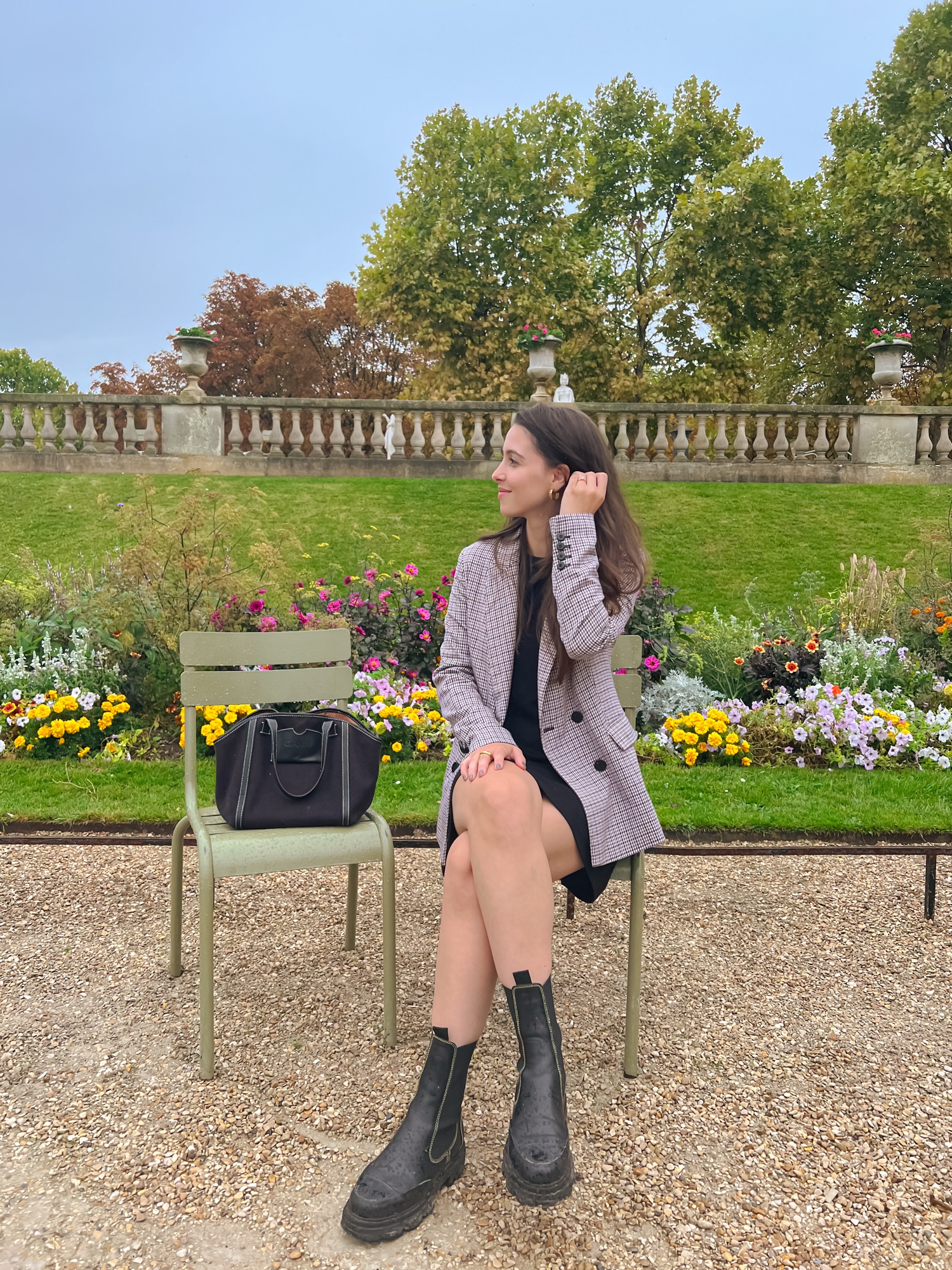
5 tips to learn a new language
1. Ouvir um podcast: Foi assim que comecei – quando descobri o Coffee Break French da Radio Lingua Network. Para este podcast em específico (para o qual existem várias línguas), há quatro temporadas. A cada temporada, o nível de dificuldade aumenta. Cada episódio tem cerca de 20 minutos mas eu demorava sempre mais tempo porque escrevia ao mesmo tempo e tentava traduzir tudo o que conseguia. Esta é a maior desvantagem de um podcast: como é apenas áudio, falta um pouco da componente visual e escrita. Mas recomendo totalmente a quem queira começar!
2. Listar as palavras mais usadas: Aprender as divisões da casa, partes do corpo e profissões é uma forma muito divertida de aprender vocabulário. Mas muitas vezes estas não são as palavras que mais precisarão! Antes de começar com o vocabulário divertido, aconselho-vos a listar as palavras mais usadas – normalmente conectores, orações interrogativas, etc. Um pouco menos divertido mas tão importante!
1. Listen to a podcast: This is how I initially started learning – when I found out about Coffee Break French from Radio Lingua Network. For this particular podcast (which exists for several languages), there are four different seasons. With each season, the difficulty is higher. Each episode has around 20 minutes but I always took much more time because I take notes and translate in my notebook everything I can. This is the biggest disadvantage of a podcast: since it is audiable only, I miss the visual and written components. But I would totally recommend for someone that wants to start!
2. List the most common words: Learning the rooms of a house, parts of the body and professions is a very fun way to learn vocabulary. However, these words are not always the most used ones! Before starting with the fun vocabulary, I advise you to make a list of the most common words – usually the connectors, interrogative clauses, etc. A bit less fun but so important!
3. Escrever 5 novas palavras / frases por dia: A consistência é o segredo. Se dedicarem 5 minutos do vosso dia a pensar na língua que estão a aprender, vão melhorar de dia para dia. Pode ser algo simples como listar 5 animas ou escrever uma frase sobre o vosso dia no idioma alvo. Vão aprender sem sequer reparar!
4. Ver vídeos, filmes e ouvir música: Este pode ser complicado ao início mas fica cada vez melhor. No início, o melhor é adicionar legendas na vossa língua natal para começarem a ficar familiarizados com o som e pronunciação. Depois, quando estiverem confortáveis, adicionar legendas no idioma alvo – vão começar a associar os sons que aprenderam às palavras escritas. Eventualmente conseguirão compreender tudo sem sequer precisar de legendas!
3. Write 5 new words / sentences per day: Consistency is key. If you consacrate five minutes of your day to think about the language you are learning, you will improve day by day. It can be something as simple as listing five animals or writing a sentence about your day in your target language. You will learn without even noticing!
4. Watch videos, movies and listen to music: This will be very hard at first but it becomes better and better. In the beginning, the best is to add subtitles in your mother tongue so you can start getting familiarizes with the sounds and pronunciation. Then, when you are confortable enough, you can change the subtitles to your target language – you will start to associate the sounds you learnt with the written words. Eventually, you will be able to understand everything without the need for subtitles!

5. A prática leva à perfeição: Ok, lembram-se das quatro fases de que vos falei? Quando me mudei para Paris estive presa na segunda fase TANTO tempo. Nos primeiros seis meses, percebia tudo o que as pessoas me diziam mas era simplesmente impossível responder. Apenas quando conheci franceses que não falavam de todo inglês (e ainda menos português) e com quem eu queria falar é que… frases começaram a sair da minha boca. Estavam longe de ser perfeitas – não tinha todo o vocabulário nem as conjugações verbais MAS as pessoas compreendiam-me. Comecei a dizer-lhe que era ok corrigir-me sempre que cometia um erro e foi assim que melhorei!
Que língua estão a aprender? 🙂
5. Practice makes perfection: Ok, so remember the four phases I told you about? When I moved to Paris I was stuck in phase two for SO long. For the first six months, I understood everything people told me but it was simply impossible to answer. It was not until I met french people that spoke zero english (and even less portuguese) with whom I wanted to talk that… the sentences just started coming out of my mouth. They were far from being perfect – I didn’t have all the vocabulary nor the right verb conjugations BUT people were understanding me. I started telling them that it was ok to correct me whenever I made a mistake and that is also how I started to improve!
What language are you learning? 🙂